
English
Weaving: planning interlaced details for accessories
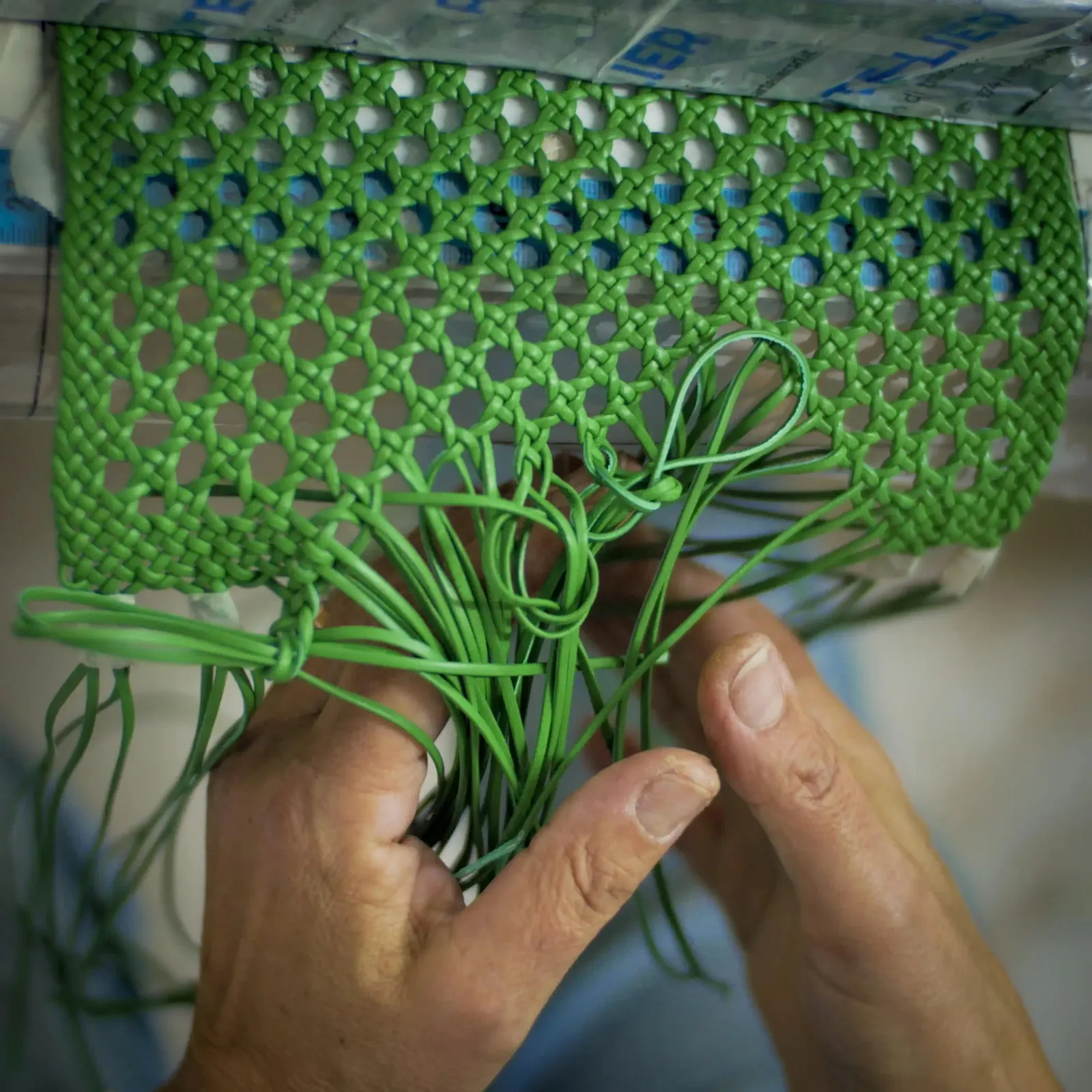
Weaving creates structure by interlacing strands or strips. At Alma’s Stile, the Italian term intreccio refers to this work. Share a reference so the atelier can discuss the appearance, material and intended result. The design and sample define the construction.
Show the structure and scale
Provide an overall view and a close-up of the detail you want to discuss. State the finished length, width or shape, and identify whether the result is an entire article or one element. Explain the visual features that matter, such as the relationship between the worked parts or the openness of the appearance. Avoid relying on the word weaving alone.
Agree the material before judging the result
Identify the proposed material and colour, and state whether you supply it. The owner confirms work using yarn, which does not mean the atelier produces or spins yarn. Ask the workshop to assess the actual material and reference together. If the material is not yet selected, record it as a development question rather than describing the sample as fully specified.
Include edges, ends and connections
Show which parts remain visible, which connect to another component and how the element should arrive for assembly. An attractive central detail is only part of the result; the boundaries and joining areas also affect the brief. Review dimensions, visible finish and the relationship to the surrounding article during sampling. Agree any use-related checks for the particular construction.
Confirm the approved repeat version
Keep the sample reference, material, dimensions and finishing decisions together. List quantities by design and colour and identify the unit being ordered. Ask for a quotation and schedule based on that agreed scope. Do not treat one reference as confirmation of every interlacing technique, material or production volume; changes should be reviewed before the work is repeated.