
English
Crochet bags for your brand: from reference to production
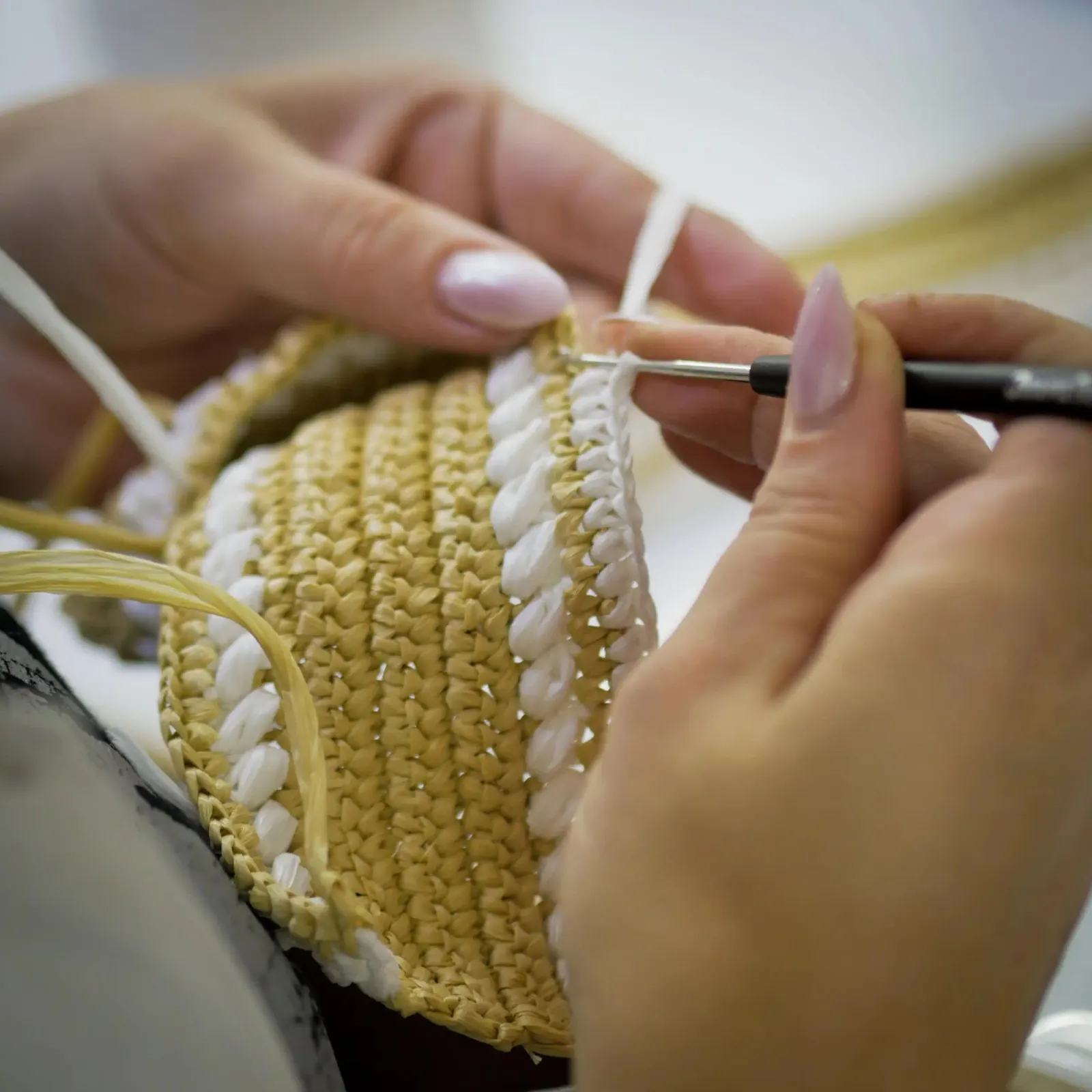
Crochet bags combine a handmade look with a practical product, which is why many fashion and accessory brands add them to their collections. Because every piece is made by hand with yarn, small decisions about yarn, stitch and construction change the appearance, the weight and the time each bag takes. This guide explains those decisions and what to prepare before you ask an atelier for a sample.
Do you need a complete bag or a crochet component?
Some brands order a complete crochet bag, including lining, handles and closure. Others order only the crochet part, for example a body panel, a flap or a decorative element, and assemble it with leather or fabric parts in their own production. Decide this first, because it changes who supplies each material, how the parts are measured and how the handover is checked.
Which details change the time and cost of each bag?
The main factors are the thickness of the yarn, the stitch pattern, how dense the work is and the size of the bag. Fine yarn and dense stitches take longer than thick yarn and open patterns. Colour changes, motifs, raised stitches and joined pieces add time. Lining, handles, zips, magnetic closures and other hardware add materials and assembly steps. A simple brief that lists these details makes quotes easier to compare.
Why does the sample matter more than the photo?
A photo shows the idea, but not the stitch tension, the weight or how well the bag keeps its shape when it is carried. Handmade crochet also varies slightly from piece to piece. The approved sample becomes the reference for colour, dimensions, stiffness and finish, so that everyone judges the production against the same physical piece.
What should you send in a quote request?
Send photos or drawings, the finished dimensions, the preferred yarn or its composition and colour, the lining and hardware you want, the quantity per colour and your target date. Say whether you will supply the yarn or hardware. If you have a reference bag, describe what you like about it, for example its shape, its pattern or its handle.
How should you plan quantities and dates?
Crochet is worked by hand, so the time per piece is the main limit on quantity. Share your launch or delivery date early, ask the atelier to confirm a realistic schedule after the sample is approved, and keep the approved sample for reorders. Alma’s Stile agrees quantities and dates per design, in writing, before production starts.