
English
Preparing embroidery components for bags, footwear and accessories
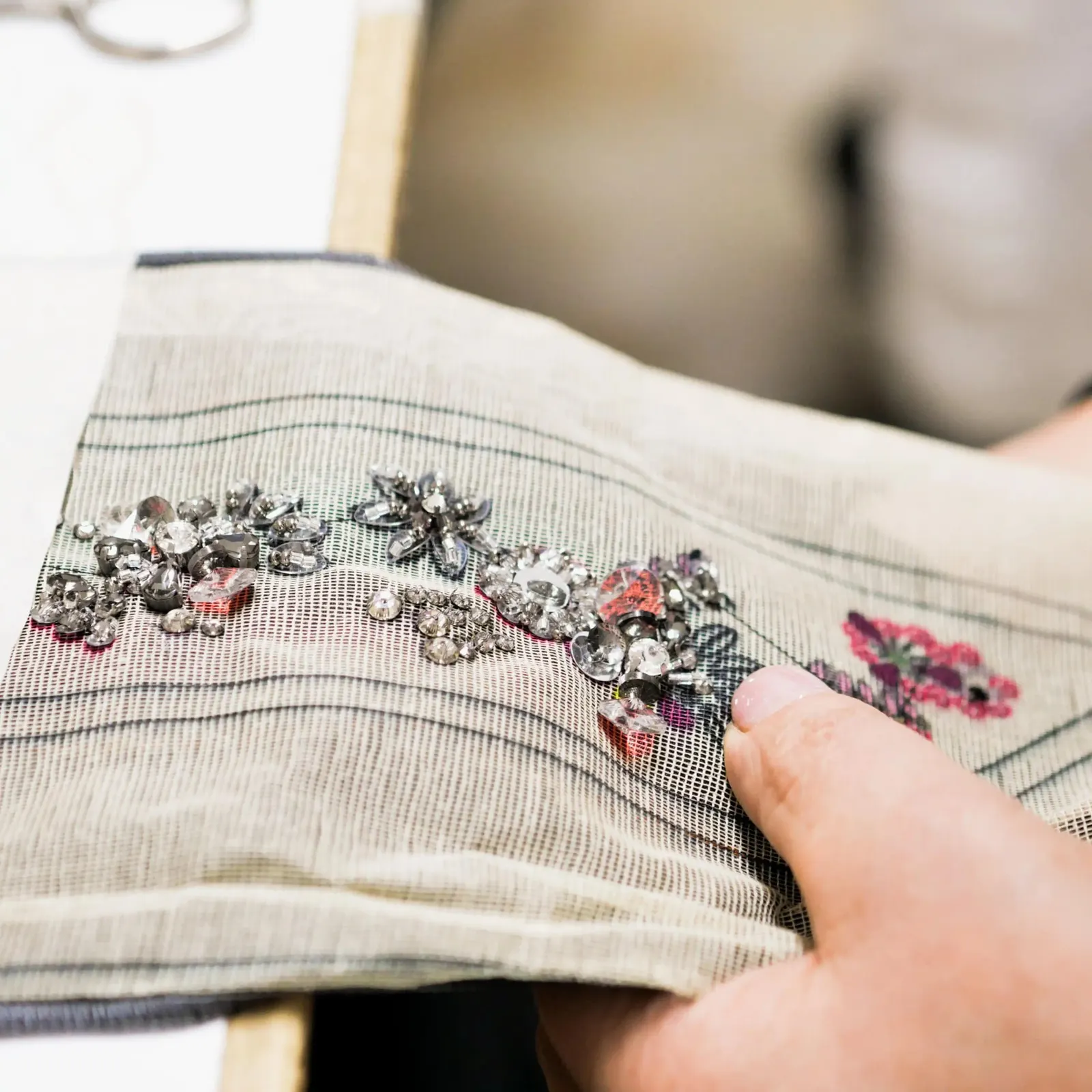
An embroidery brief needs more than an attractive motif. When the work becomes part of a bag, shoe, slipper or accessory, the surrounding construction matters too. Alma’s Stile includes embroidery among its workshop processes and works on complete articles and elements. Start by identifying whether your enquiry is for a decorated component or work on an already assembled item.
Identify the surface and working area
Show the material to be worked, its dimensions and the available area. State whether it will arrive as fabric, a cut piece or an assembled article. Mark seams, folds and areas reserved for later attachment. Access to a flat panel can differ from access inside a finished item, so discuss that stage before treating the two jobs as equivalent.
Turn the visual reference into a specification
Provide the motif at the intended finished size and give placement measurements from identifiable edges. Name the colours and reference version. If an image is inspiration rather than an exact design, explain which features are essential. Ask the atelier to confirm the file or physical reference needed for the proposed process rather than assuming that one file format suits every job.
Check both sides of the sample
Inspect the visible face and any reverse that will remain exposed or contact another component. Compare placement, outline, colour and finishing with the agreed brief. Check how the decorated piece will be joined into the item. If the product needs particular care or performance checks, define them separately; an attractive sample does not establish every aspect of durability.
Keep repeat orders tied to one approved version
Record the approved sample, material and placement measurements together. Separate quantities by design and colour, and identify any changes since the previous version. Confirm the division of responsibility for base materials, preparation and subsequent assembly. A quotation should describe these boundaries so a repeat order reproduces the agreed work rather than an outdated photograph.