
English
Hand embroidery or machine embroidery? How to choose for your product
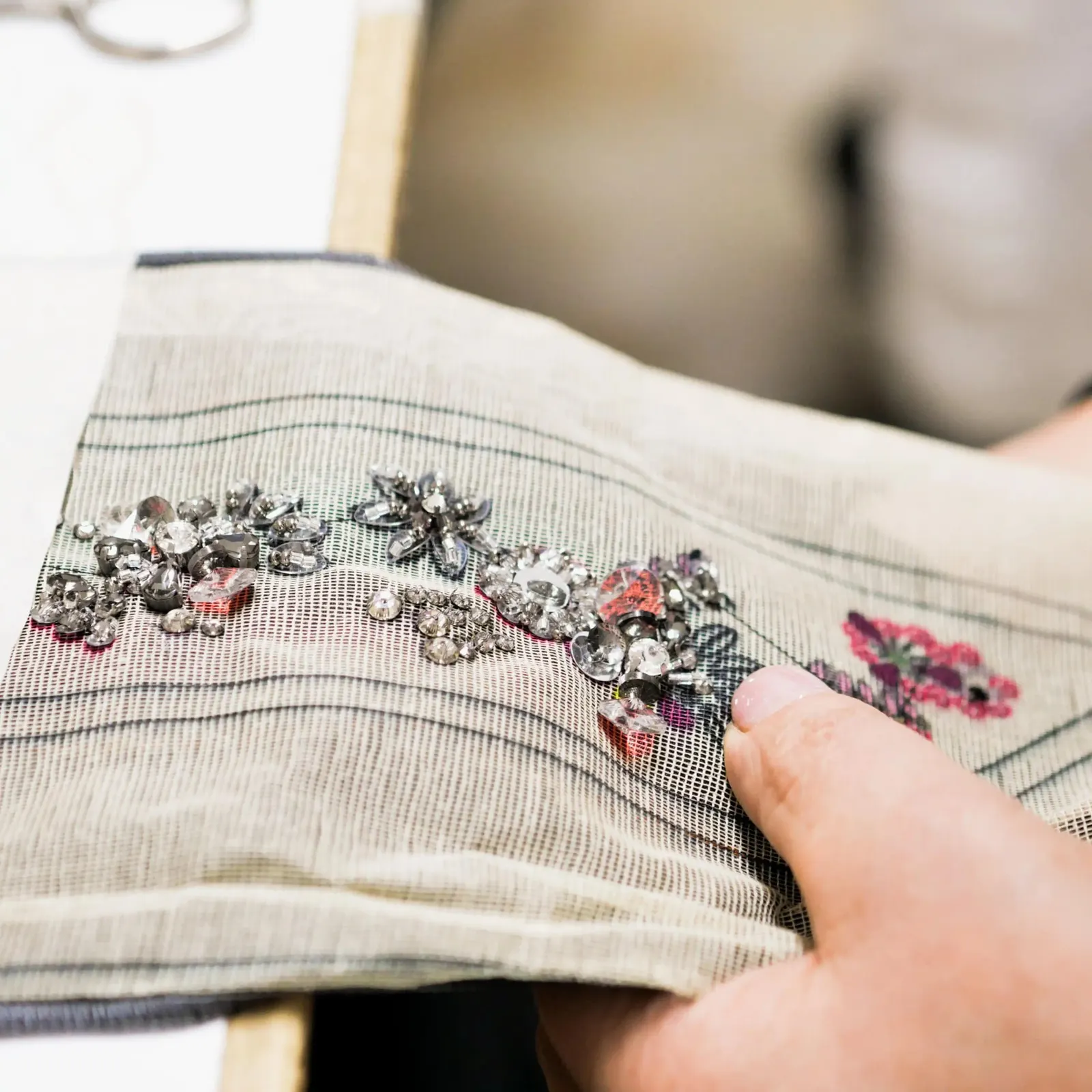
Hand embroidery and machine embroidery can both decorate a bag, a shoe upper or an accessory, but they produce different results, take different amounts of time and suit different quantities. The right choice depends on the effect you want, the base material and how many pieces you need. This article sets out the main differences and the questions to answer before you brief an atelier. Whatever you choose, the decision should be confirmed on a sample of your actual design.
What is the difference between hand and machine embroidery?
In machine embroidery a programmed machine repeats a digitised design, so every piece is very close to the next one. In hand embroidery each stitch is placed by a person, which allows raised effects, mixed threads, beads and small variations that give the piece a handmade character. Hand work usually takes much longer per piece, while machine work needs a digitised file and a set-up before the first piece is stitched.
When does hand embroidery make sense?
Hand embroidery suits designs where texture and depth matter more than perfect repetition: raised motifs, fine details, combinations of thread with beads or sequins, or work on shaped pieces that cannot easily be placed in a machine hoop. It also suits small runs and limited editions, where the handmade character is part of the product’s value and the price.
When is machine embroidery the better choice?
Machine embroidery suits flat areas, logos and repeated motifs that must look identical across many pieces, and designs that will be reordered in the same form. It is usually the more economical option when quantities grow, because the time per piece is shorter once the design file and settings are ready.
How does the base material change the decision?
Thick, stretchy, padded or already-assembled parts behave differently under a needle. Leather, felt, knitted fabric and pre-made shoe uppers may need a stabiliser, a different stitch density or a hand technique. Send the real base material, or a precise description of it, so the sample shows how the embroidery sits on the material you will actually use.
How should you brief either technique?
Include the artwork or a photo, the finished size and position of the motif, thread colours and any beads or other materials, the base material, the quantity per design and your target date. Say whether the embroidered part will be sewn into a product afterwards and what happens on the reverse side. Alma’s Stile confirms the technique, the materials and the appearance on a sample before any production quantity is agreed.