
English
What affects the cost of embroidery and crochet production?
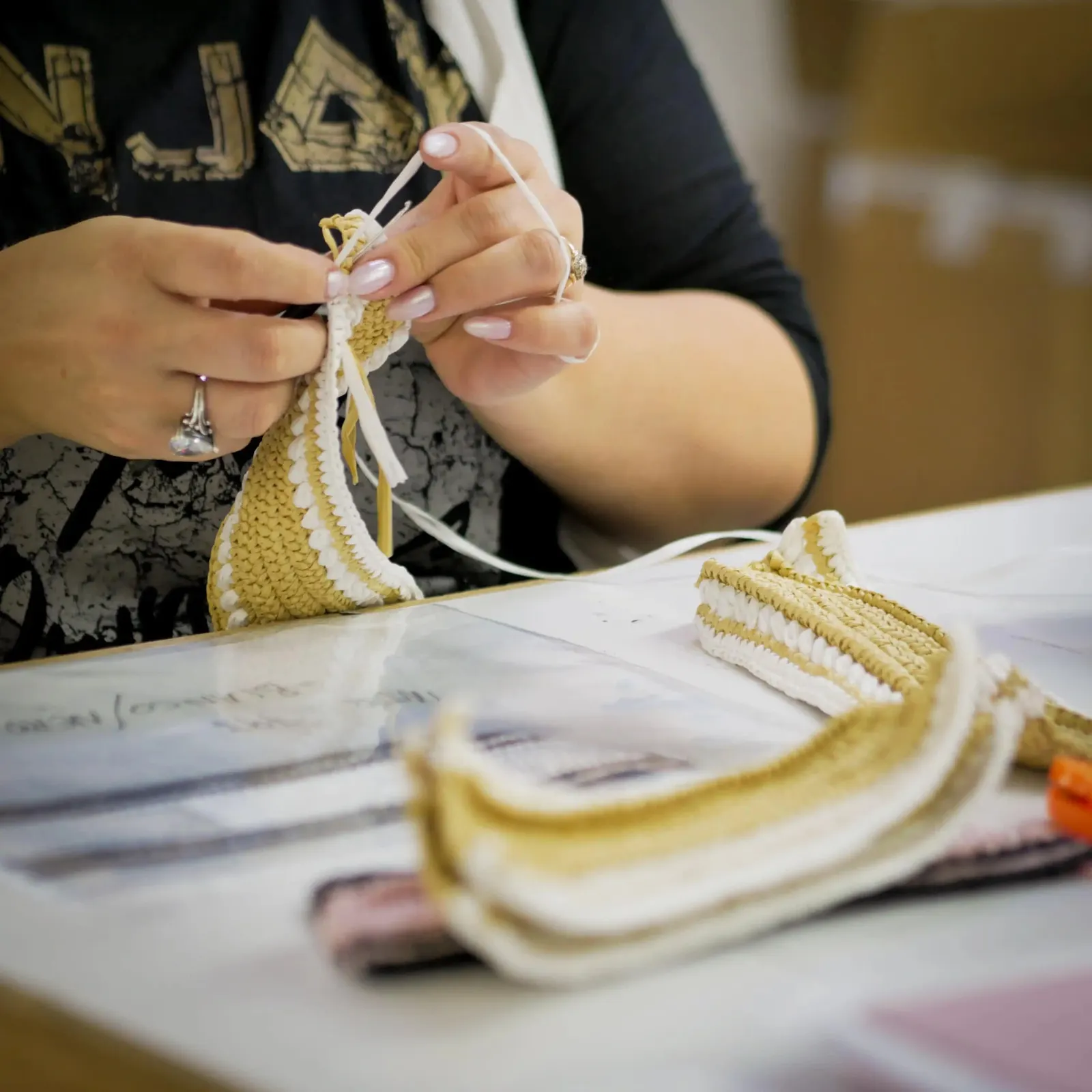
There is no single price for embroidery or crochet, because the cost comes mainly from the time skilled people spend on each piece. Two designs that look similar in a photo can take very different amounts of work. Knowing which factors drive the cost helps you design with your target price in mind and compare quotes from different suppliers fairly. This article lists those factors in the order they usually matter.
Design complexity and coverage
The more of the surface the work covers, and the finer the detail, the longer each piece takes. In embroidery, stitch count, number of colours, raised effects and added beads or sequins all add time. In crochet, small stitches, dense work, colour changes and motifs take longer than open patterns in thick yarn. Simplifying one detail can sometimes reduce the cost noticeably without changing the overall look.
Materials: supplied or sourced
Yarn, thread, base fabric, lining and hardware can be supplied by you or sourced by the atelier. Supplying your own materials gives you control over quality and colour, but you need to deliver them on time and with a small allowance for samples and waste. If the atelier sources them, the quote includes the material cost and the time needed to buy them.
Size, quantity and repetition
Larger pieces take longer. Quantity matters too: the first pieces of a design are slower while the team learns it, and later pieces are quicker. Many colourways or sizes of the same design increase preparation and checking. Reorders of an approved design are usually more efficient than a new design of the same size.
Sampling and changes
A sample takes more time per piece than production, because the technique, materials and measurements are being decided. Each round of changes adds time. Clear references, real materials and a single decision-maker on your side keep the number of sample rounds low.
Finishing, packaging and documents
Lining, assembly, labels, individual packaging, special inspections and export documents all add work after the handwork itself. Ask for them to be listed separately in the quote so you can see which part of the price they represent.
How do you get quotes you can compare?
Send every supplier the same brief: drawings or photos, finished dimensions, materials and who supplies them, quantity per design and colour, finishing and packaging, and the delivery terms. Ask whether the price includes the sample and how changes are charged. Alma’s Stile quotes per design after reviewing the brief, and confirms the final price once the sample is approved.