
English
Producing textile accessories in Albania: a practical guide for European brands
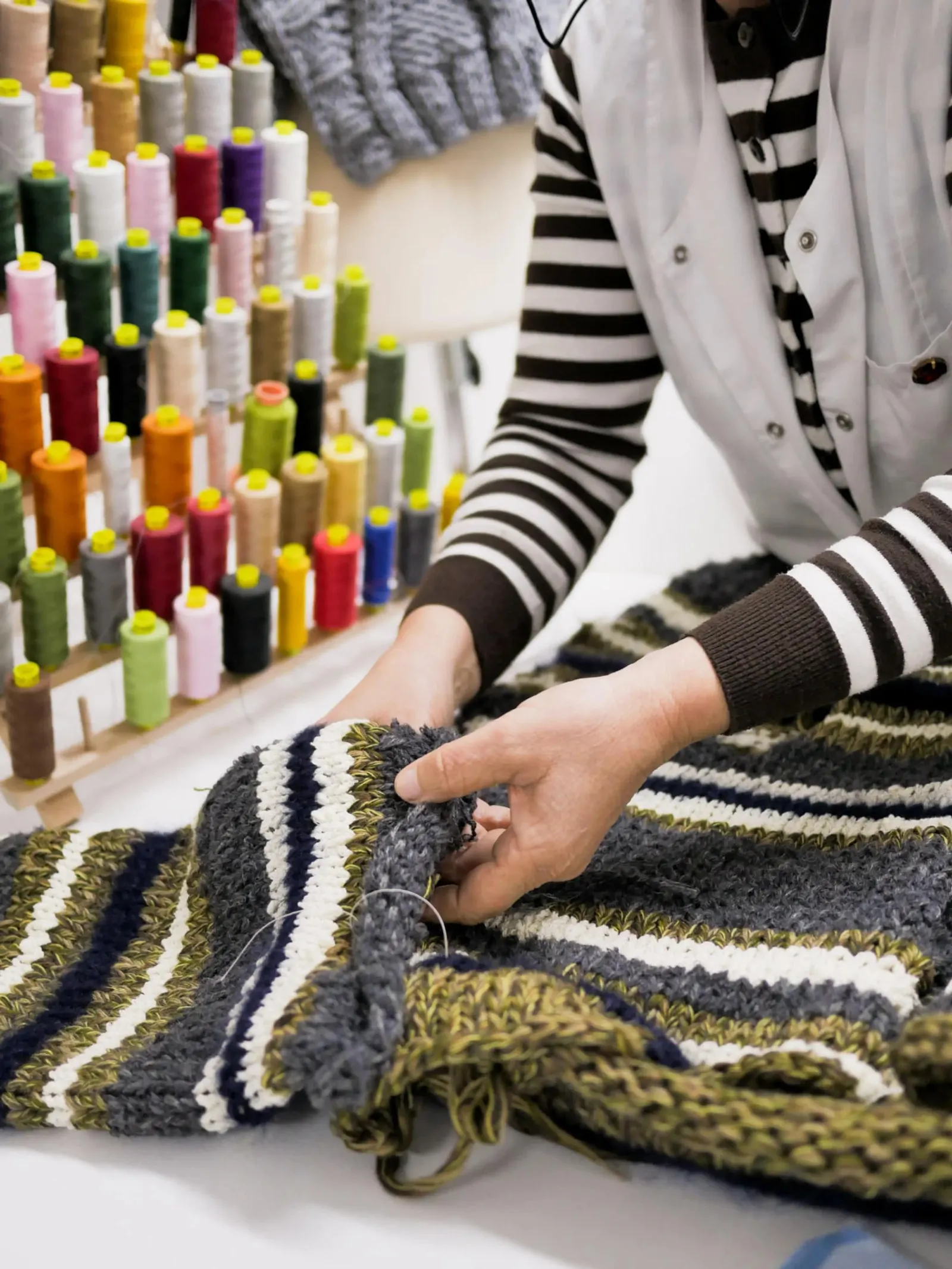
Albania is a practical option for European fashion and accessory brands that need skilled handwork close to their own market. Alma’s Stile is an atelier in Tirana with a team of around 20 professionals working on embroidery, crochet, weaving (intreccio) and machine-sewn accessories, delivered as finished products or as components for your own production. This guide explains what to check before you start, so that your first sample and your first order rest on agreed facts rather than assumptions.
Why do European brands produce in Albania?
Tirana uses Central European Time, the same as Rome, Paris and Berlin, so calls, approvals and corrections happen within the same working day. Albania has a long tradition of textile and footwear work for Italian and other European companies, and many professionals are used to working from a technical sheet, a reference sample or a design supplied by the brand. For handwork such as embroidery and crochet, where the result depends on skilled hands, being able to visit the atelier, see the work in progress and approve samples in person is a real advantage.
What should you know about customs and shipping?
Albania has a Stabilisation and Association Agreement with the European Union. Under this agreement, many industrial products that meet the preferential rules of origin can enter the EU without customs duties. Whether your product qualifies depends on its materials, the work carried out and the documents issued, so confirm the customs classification and the origin rules with your customs broker before you fix a selling price. For every order, agree in writing who arranges transport, who pays any duties and taxes, and which delivery terms apply, for example an Incoterms rule.
Which work can you outsource?
You can order a complete item, such as a bag, a pair of slippers, a bow or another artisan accessory, or a single operation on your own components. Typical examples are embroidering a panel, crocheting a decorative element, adding interlaced details or machine-sewing bows that you then assemble in your own factory. Outsourcing one operation works well when the handover is clear: how your parts arrive, how the worked parts are checked and how they are packed for the next step.
How does a first project start?
Send what you have: drawings, photos, a reference sample or a technical sheet, together with the quantity per design, the size or dimensions, the materials and your target date. Say which materials you will supply and which you would like us to source. From this brief we discuss the technique and prepare a sample. Only after you have approved the sample and its written specifications do we confirm price, quantity and dates for production.
What should you agree before production starts?
Agree the approved sample as the reference for the order, the acceptable tolerances, the labelling and packaging, how quality will be checked and which documents travel with the goods. Minimum quantities and lead times are agreed per design, because they depend on the technique, the size and the amount of handwork. When these points are written down before production, both sides know exactly what will be delivered.